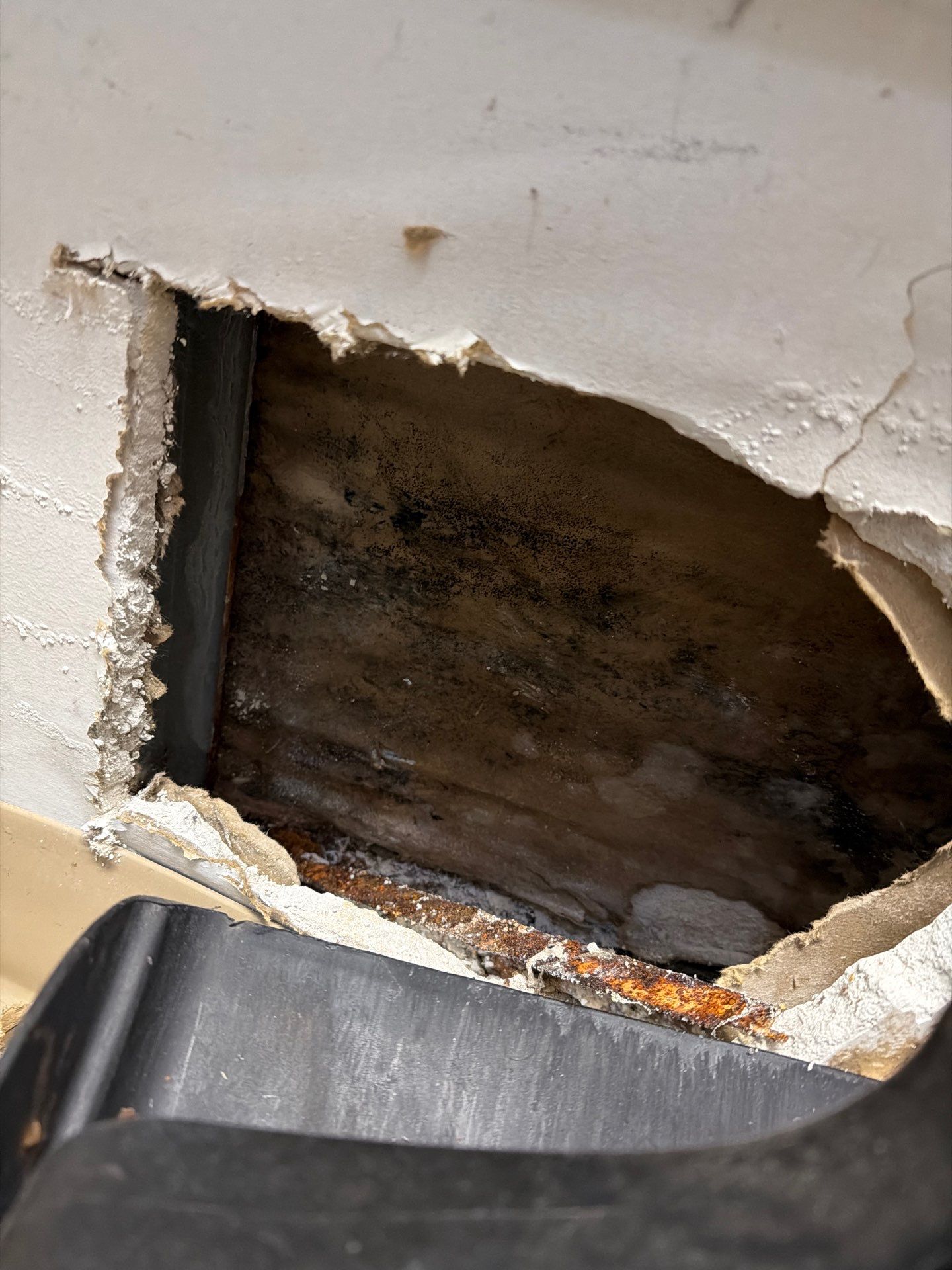
The First 10 Minutes: Stop the Water
Before you photograph, call, or mop, you shut it down.
- Kill the main water valve. Usually in the basement, crawl space, or near the water heater in Kirklin homes. Turn clockwise until it stops.
- Cut power to wet areas. Flip the breaker for any room with standing water. Do not walk through water to reach a panel.
- Open faucets on lower floors. This drains pressure from the line and slows the leak.
- Move what you can. Lift rugs, get electronics off the floor, slide furniture legs onto foil or blocks.
- Call a restoration company before your insurer. Mitigation is your job under most policies. Waiting is what gets claims denied.
What to Document Before Cleanup Starts
Insurance adjusters reward homeowners who arrive with proof. Five minutes of phone work saves thousands.
- Wide shots of every affected room from the doorway
- Close-ups of the burst pipe, fitting, or supply line
- Video panning across standing water with the time visible
- Photos of damaged contents (furniture, boxes, drywall, flooring)
- A written list of items with rough purchase dates and values
- Screenshots of the Kirklin weather if a freeze caused the burst
- Photos of the shutoff valve in the closed position (proves you mitigated)
- Receipts for any emergency supplies, towels, fans, or hotel stays
Save everything to cloud storage. Adjusters lose emails. You should not lose evidence.
Why Kirklin Homeowners Call Kirklin Water Restoration
- Local crews based in central Indiana, not a national call center
- IICRC Certified technicians on every job
- BBB A+ rating since founding in 2018
- Direct insurance billing on most carriers
- Written scope before work starts, no surprise invoices
- If we cannot help your situation, we tell you and refer you out
The IICRC Drying Timeline
Drying is not optional. Wet materials grow mold in 24 to 48 hours. Here is how a proper job runs.
- Hour 0 to 2: Arrival, inspection, moisture mapping with thermal imaging
- Hour 2 to 6: Water extraction with truck-mount or portable units
- Hour 6 to 24: Air movers and commercial dehumidifiers placed, affected materials removed
- Day 2 to 4: Daily moisture readings, equipment adjustments, antimicrobial treatment
- Day 3 to 5: Materials reach dry standard, equipment pulled, final readings documented
- Week 2 onward: Reconstruction (drywall, paint, flooring, trim)
For deeper detail on why speed matters, the 24 to 48 hour mold window explains exactly what happens inside your walls when drying is delayed.
Repair Cost Ranges in Kirklin
Every loss is different, but here is what Kirklin Water Restoration sees on real Kirklin jobs. These are full restoration numbers, not just plumbing.
- Minor leak, one room, fast response: $1,000 to $3,500
- Multi-room Category 1 (clean water) loss: $3,500 to $7,500
- Basement flood from burst supply line: $4,000 to $12,000
- Two-story ceiling collapse from upstairs burst: $8,000 to $20,000
- Category 2 (gray water) with sat drywall and flooring: $7,000 to $18,000
- Mold remediation added after delayed response: add $2,000 to $6,000
- Hardwood floor refinishing or replacement: $4 to $12 per square foot
- Contents pack-out and off-site cleaning: $1,500 to $5,000 depending on volume
Plumber repair of the pipe itself usually runs $300 to $1,500 separately. Most homeowner policies cover sudden burst pipe events but not the plumbing repair. Read your declarations page or ask us to review it with you.
Costs climb fast when response is delayed. A $4,000 job at hour two becomes a $14,000 job at hour seventy-two once drywall wicks, subfloors swell, and mold colonies establish behind baseboards.
What Insurance Usually Covers
Most Kirklin policies treat sudden and accidental burst pipes as a covered peril. Here is the typical breakdown.
- Covered: Water extraction, drying, mold prevention, damaged drywall, flooring, contents, and reconstruction
- Usually covered: Hotel stays if the home is unlivable (loss of use coverage)
- Not covered: The pipe repair itself, gradual leaks, neglect-related damage
- Denied often: Vacant home losses with no heat, freezes from open windows, slow drips ignored for weeks
We document every loss using the same software adjusters use. If you need help understanding the process, walk through our water damage insurance claim guide before you file.
Mistakes That Cost You Thousands
- Waiting until morning to call because you do not want to bother anyone
- Using a shop vac on Category 2 or 3 water without PPE
- Turning the heat off to save money during drying (slows evaporation by 40 percent)
- Ripping out drywall before the adjuster sees the scope
- Hiring a handyman to dry the home with box fans
- Signing a contractor's direction-to-pay before reading it
- Throwing away damaged contents before they are photographed and listed
- Accepting the first adjuster offer without a written scope from a restoration pro
When to Call and What to Expect
Pick up the phone if you see any of these signs.
- Standing water anywhere in the home, even a small puddle near a wall
- Brown or yellow staining on ceilings or baseboards
- A sudden spike in your water bill with no obvious source
- Hissing, dripping, or running water sounds inside walls
- A musty smell that appears after a cold snap
When Kirklin Water Restoration arrives, expect a uniformed technician, a marked truck, and a written inspection summary before any equipment is unloaded. We walk you through the scope, the timeline, and the insurance process in plain language. No pressure tactics, no scare tactics, no surprise charges at the end.
Preventing the Next Burst
Once you have lived through one burst pipe event, you do not want a second. A few weekend projects can spare you another claim.
- Insulate exposed pipes in attics, crawl spaces, garages, and exterior walls with foam sleeves
- Disconnect outdoor hoses every fall and shut off the hose bibb supply if you have one
- Swap rubber washing machine hoses for braided stainless steel every five years
- Replace the water heater at year ten, even if it still works, and add a drip pan with a leak sensor
- Install smart leak detectors under sinks, behind toilets, and near the water heater
- Keep the thermostat above 55 degrees when traveling in winter, and open cabinet doors under sinks on exterior walls
- Know your main shutoff location and test it once a year so it actually turns when you need it
A $40 leak sensor and a $15 pipe sleeve can prevent a $15,000 claim. The math is not subtle.
Common Burst Pipe Causes We See in Kirklin
Knowing the cause helps you explain the loss to your adjuster and prevent the next one.
- Frozen and thawed lines in uninsulated exterior walls, garages, and crawl spaces
- Corroded galvanized supply lines in homes built before 1970
- Failed washing machine hoses, the single most common indoor flood cause
- Cracked PEX fittings from poor crimping or rodent damage
- Slab leaks from copper pinholes under the foundation
- Water heater supply line ruptures, especially on units over 10 years old
- Toilet supply line failures from brittle plastic nuts that crack after a decade
- Ice maker line splits behind refrigerators that never get pulled out
If you are unsure where the water is coming from, our team can locate the source during the inspection. Start with our first steps after water damage checklist while you wait.